Water Softener Installation in Randburg

Stop limescale wrecking your geyser, kettle, tiles and taps. Qualified plumber-installed ion-exchange softeners across Randburg, Fairland and Northcliff.

Registered plumber install Randburg local since decades Hardness test included
Third geyser in seven years. I thought it was the brand. It was the water.

A homeowner up on the ridge in Northcliff called us after his geyser tripped for the third time in just over a year. He had already replaced the whole unit twice. He was ready to blame the geyser brand, the electrician, anything. When we pulled the element, it was crusted white, three millimetres of calcium scale caked onto the heating coil. The element was running hot because the scale was insulating it from the water. That is what was burning it out.

We tested the cold feed at the meter. Hardness came back at around 180 mg/L, well into the moderately-to-hard range for municipal water on the Randburg ridge. Every time the geyser heated up, calcium was dropping out of solution and welding itself to the element, the tank walls, and the inlet elbow.

We fitted a 32-litre ion-exchange softener in the garage, just after the water main, before the split to the geyser. A fresh element went into the geyser at the same time. Twelve months later, we pulled the element again on his annual service. Clean as new. No scale. He has not called about a tripped geyser since.

Hard water is a silent tax on every fitting in your house. If you want to see what the full water filtration and water purification options look like, we cover the whole picture.
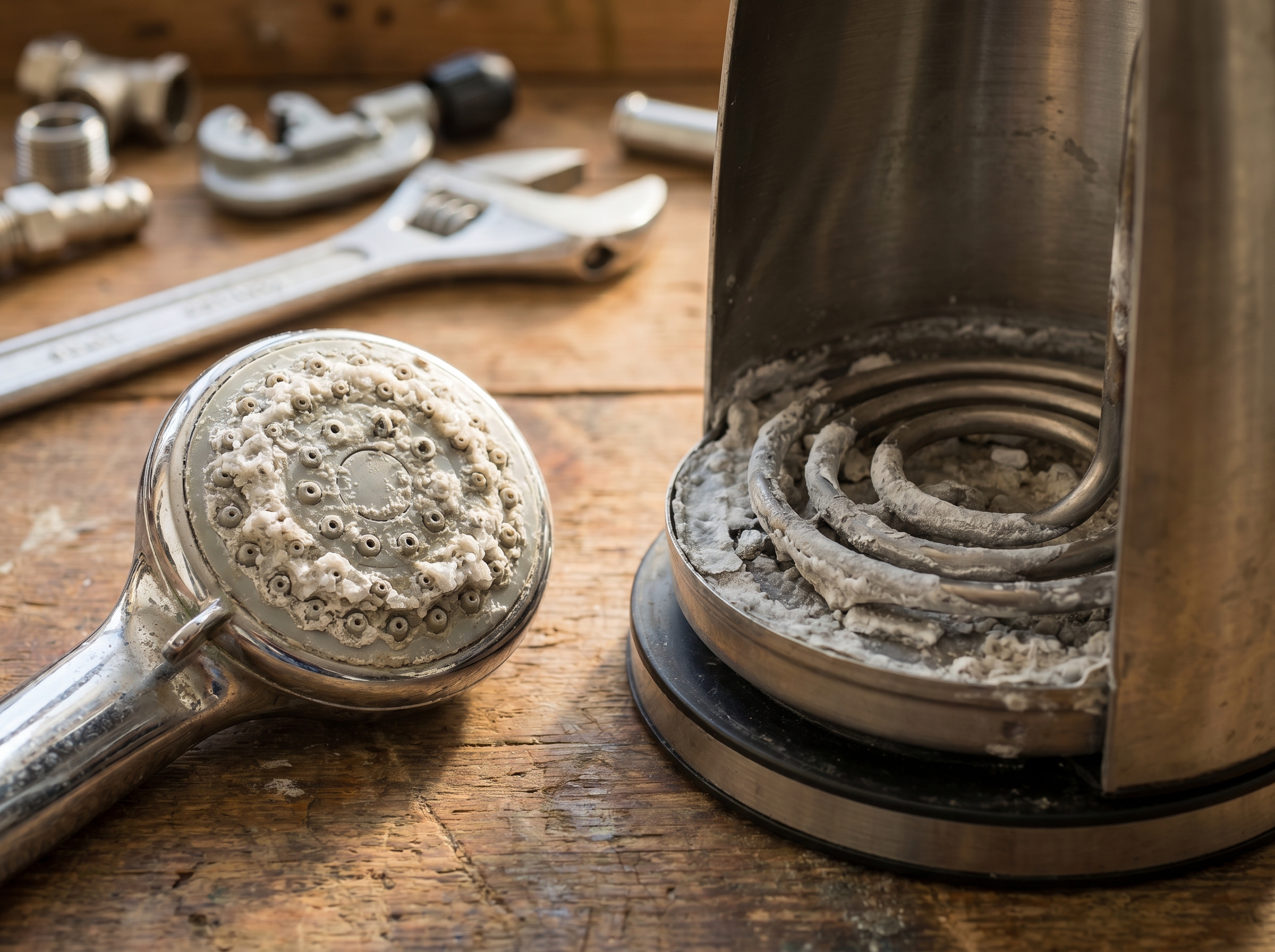
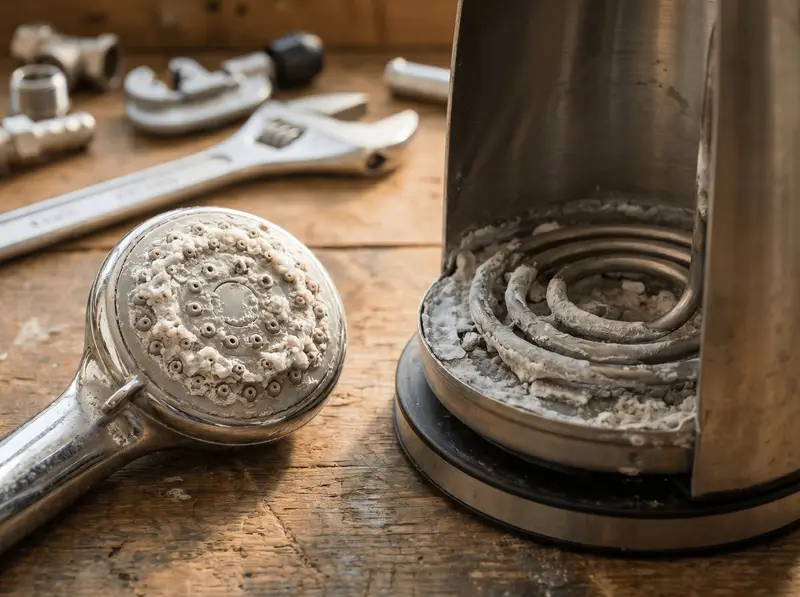
White chalky limescale crusted on a chrome shower rose and a kettle heating element

Why Randburg Water Scales Up Your Home

Rand Water pulls from the Vaal Dam and Integrated Vaal River System. On its way through dolomite and limestone-heavy geology, the raw water picks up dissolved calcium and magnesium. By the time it reaches your meter in Fairland, Randburg or Northcliff, it is classed as moderately hard, typically between 120 and 200 mg/L as calcium carbonate.

Every time that water is heated, calcium drops out of solution and sticks to metal surfaces. Over months and years you see it as:

  • Geyser element failure, scale insulates the element, it overheats and burns out
  • Dull, cloudy glass from the dishwasher, no matter how much rinse-aid you use
  • Scale rings around tap aerators, showerheads, and toilet cisterns
  • Stiff, scratchy laundry and soap that will not lather properly
  • Scale inside the kettle and the shower mixer cartridge seizing up

A softener gets the calcium and magnesium out before the water reaches anything that can be damaged.

Water Softener Systems We Install

Not every home needs the biggest unit. We size the softener to your family size, water usage, and hardness level, so you spend once and forget about it.

Compact Single-Tank Softeners

Entry-level ion-exchange softener suited to smaller homes and townhouses. Neat single-cabinet design, easy install, salt compartment built in. A solid choice for 1 to 3 bedroom properties.

  • Single-cabinet footprint
  • Timer-based regeneration
  • 12 to 16 L resin capacity
  • Budget-friendly entry point
  • 2 to 4 person households

Metered Twin-Tank Softeners

Our most popular choice for Randburg family homes. Smart metered head regenerates only when needed, not on a fixed timer. Uses up to 30 percent less salt and water than timer units.

  • Smart metered regeneration
  • Lower salt and water usage
  • 24 to 32 L resin capacity
  • 4 to 6 person households
  • Bypass valve included

High-Capacity & Duplex Systems

For larger homes with heated pools, big laundries, or properties running on borehole water blended with municipal. Duplex units give you continuous soft water, never a regen cycle gap.

  • 40 L+ resin capacity
  • Continuous soft water output
  • Large-home and estate suited
  • Works with borehole blends
  • Pre-filter and bypass built in
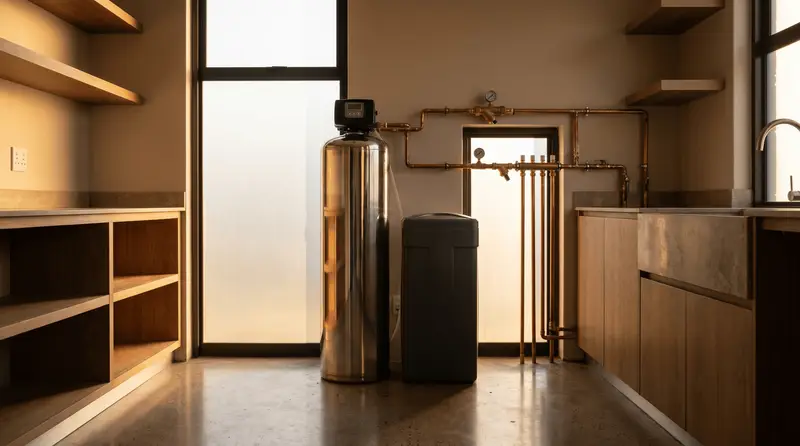
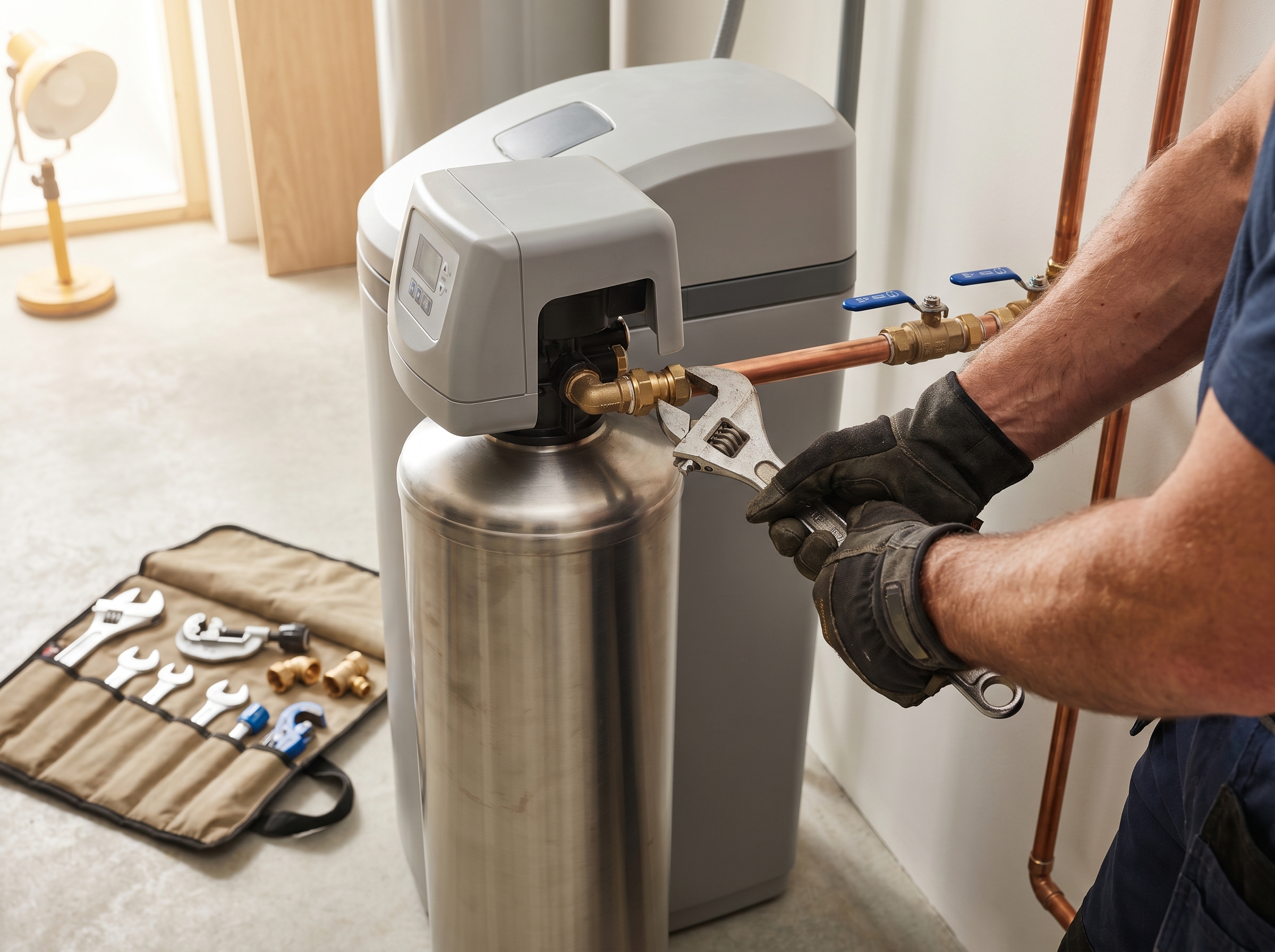
Plumber fitting the inlet bypass on a residential ion-exchange water softener

How Ion-Exchange Softening Actually Works

It is not magic, and it is not a gimmick. A softener is a tall resin tank full of tiny polystyrene beads, plus a smaller salt tank next to it. Here is the full cycle:

  • Service: Hard water enters the resin tank. Calcium and magnesium ions stick to the beads. Sodium ions release into the water. Softened water flows out to your house.
  • Brine draw: Every few days the control head pulls saturated brine out of the salt tank.
  • Regeneration: The brine flushes through the resin. Sodium knocks the captured calcium and magnesium off the beads. The resin is now fresh again.
  • Rinse and reset: A final rinse flushes the hardness and excess brine to the drain. Back to service.

A metered softener does this roughly once every 3 to 7 days for a typical family. You top up salt in the brine tank every four to six weeks. That is the whole maintenance job.

How We Install Your Softener

We do not rock up with a unit in the back of the van and guess where it goes. Four-step process, site-assessed every time.

1

Hardness Test

We test your cold feed at the meter for hardness, iron, pH and total dissolved solids. No test, no quote. You need to know what is in your water before spending on a softener.

2

Sizing & Quote

Based on your hardness result, household size and daily water usage, we size the right resin capacity. Under-sizing means constant regen. Over-sizing wastes your money. We get it right the first time.

3

Professional Install

Cold main shut-off, new bypass valve fitted, softener plumbed in with isolation valves, drain line run to the nearest point, brine tank loaded, unit programmed to your hardness setting.

4

Handover & Aftercare

We run the first regen cycle together, show you how to top up salt, and book the first annual service. Installed, tested, documented, and covered by our workmanship guarantee.

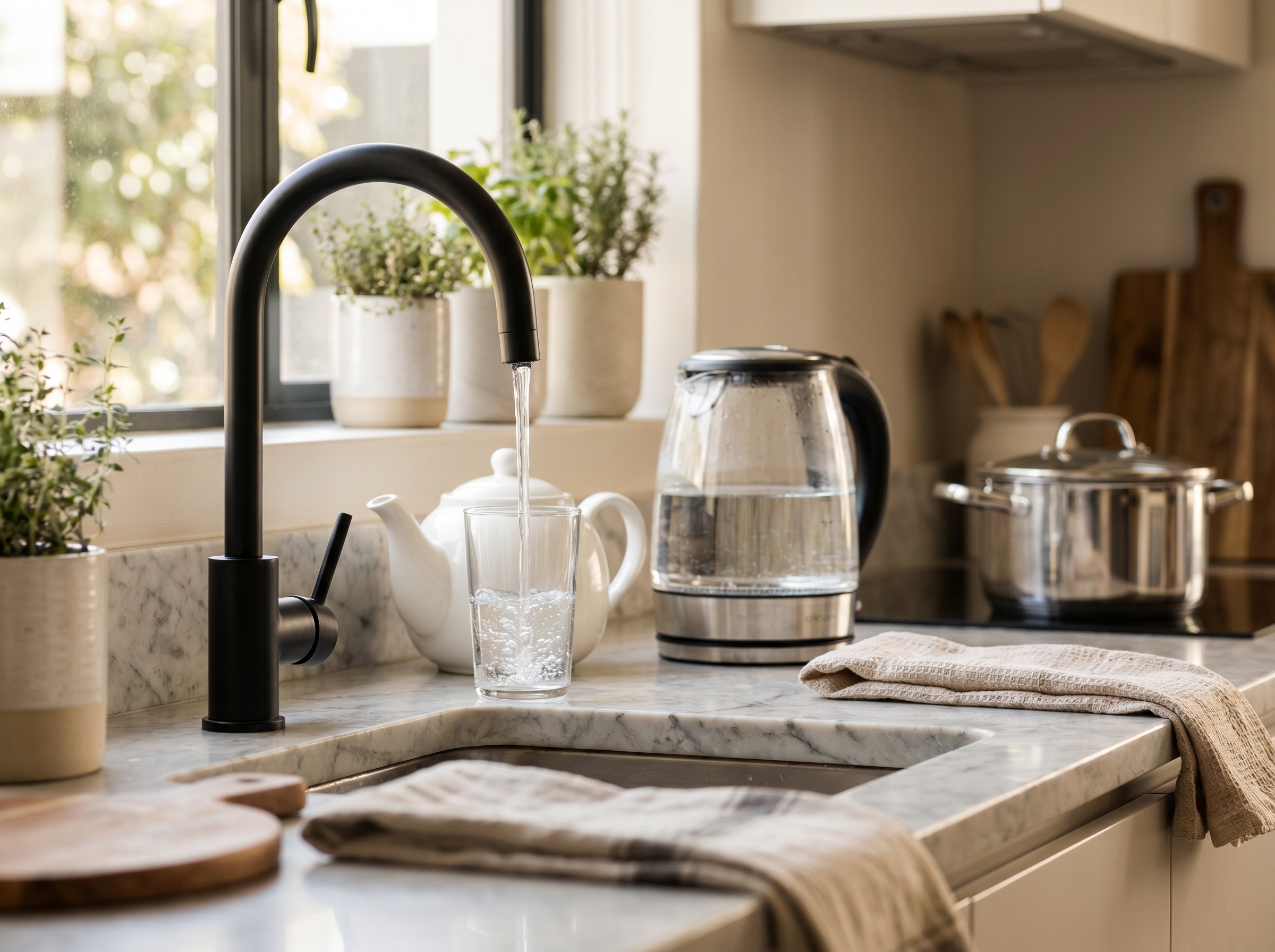
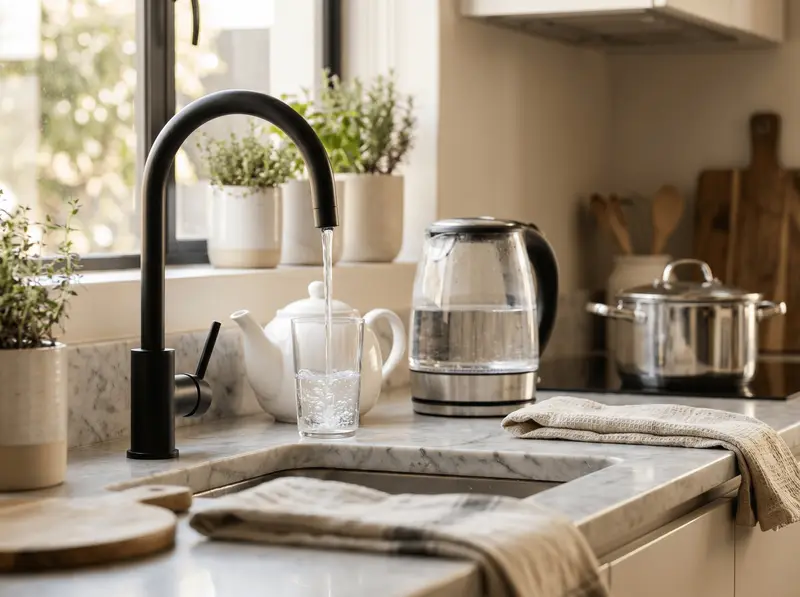
Clean soft water pouring from a kitchen tap with a scale-free glass kettle in the background

What Changes When the Softener Goes In

Most Randburg homeowners notice the difference inside a week. Every tap in the house is now delivering water that cannot scale up.

  • Geyser life doubles. Elements stop burning out. The geyser runs more efficiently, uses less electricity.
  • Glassware comes out clear from the dishwasher. No white film, no cloudy spots.
  • Soap lathers properly, so shampoo, dishwashing liquid and laundry detergent all last longer. Most families cut their detergent spend by roughly a third.
  • Tiles and shower screens stay clean. Scale rings around mixers and showerheads stop forming.
  • Skin and hair feel softer. Calcium-free water does not strip the skin or leave residue in your hair.
  • Appliance warranties stay valid. Dishwasher and washing machine manufacturers list hard-water scale damage as an exclusion.

Pair the softener with an under-sink reverse osmosis system for the kitchen and you have a complete whole-home solution, soft water everywhere, pure drinking water at the sink.

Why Homeowners Choose Andy Plumbers

A softener is the easiest part. Sizing it properly, plumbing it in correctly, and maintaining it is where it goes right or wrong.

Registered Plumber, Not a Salesperson

We are a plumbing business first. We install softeners because we have spent decades fishing scaled-up elements out of Randburg geysers and we know exactly what hard water does to a home. You get the install from someone who understands the whole system, not a retailer reading a script.

Honest Sizing, No Over-Sell

If a 16 L unit is right for your home, we quote a 16 L unit. Plenty of suppliers push the biggest system they can so the commission goes up. We test your water, match the capacity to your family, and explain why. Smaller bill, right result.

Proper Bypass & Drain Setup

A softener without a proper bypass valve is a headache waiting to happen, if anything goes wrong you cannot isolate it. We always install a full three-valve bypass and a dedicated drain line. Service calls take 10 minutes instead of a half-day repiping job.

Annual Service & Salt Supply

We offer an annual maintenance call, resin check, brine tank clean, control-head test, salt refill. You can forget about the unit completely, or we can deliver salt to your door every six weeks. Whatever suits you.

Water Softener Install Areas

We cover the Randburg ridge and the surrounding suburbs, where calcium-rich municipal supply is hitting geysers the hardest.

Most of our water softener installs cluster along the ridge, where older homes and longer pipe runs give the scale more time to build up. Common suburbs we work in:

Fairland, Northcliff, Cresta, Linden, Parkhurst, Robindale, Greenside, Emmarentia, Blairgowrie, Bordeaux, Ferndale, Roosevelt Park, Randpark Ridge, Ferndale and Windsor, Honeydew, Sundowner, Boskruin and Bromhof.

Not sure if you have hard water? Walk to your kettle and have a look at the element. If it is crusted white, or if the bottom of the kettle has a powdery scum after boiling, you have a scale problem. Book a free hardness test and we will give you an accurate number before anything else.

While we are assessing, a lot of homeowners also ask about the borehole water testing side of things, especially if they blend borehole with municipal. If you have a borehole feeding the house, we can size a softener that handles both sources.

Water Softener Questions, Answered

Is the water in Randburg hard?

Randburg municipal water is classified as moderately hard. Rand Water pulls supply from the Vaal system, which picks up calcium and magnesium on its way through dolomitic and limestone-rich geology. Hardness varies by suburb and time of year, but most homes on the ridge, from Fairland through Northcliff and up into Linden, see scale build-up in kettles, showerheads and geyser elements within a couple of years.

If your home is on a blend of municipal and borehole water, hardness can be significantly higher.

How does a water softener work?

A water softener uses ion-exchange resin beads to swap hardness minerals (calcium and magnesium) for sodium. Hard water flows through the resin tank, the resin grabs the calcium and magnesium, and softened water flows out to your house.

Every few days the softener flushes itself using brine from the salt tank, which regenerates the resin so it can keep working. It is a proven technology that has been around since the 1960s.

How much does a water softener cost to install in Randburg?

Whole-house ion-exchange water softener systems in Randburg typically start from around R12,000 for an entry-level system and can run up to R35,000 or more for larger, dual-tank, metered systems fitted with bypass valves and pre-filters. Cost depends on household size, water usage, and whether the unit is a timer-based or a smart metered model.

We visit the site, check your water hardness and usage, and give you an honest quote. See our water filter maintenance and cost pages for the full breakdown.

Is softened water safe to drink?

Softened water is safe for most people to drink, but it is slightly higher in sodium than raw water. If you are on a strict low-sodium diet, or you prefer the taste of untreated water, we fit a separate drinking-water line that bypasses the softener.

Most homeowners pair a softener with an under-sink reverse osmosis system for the kitchen tap, giving them soft water everywhere and pure mineral-free drinking water at the sink.

Do I need a water softener or a water filter?

They solve different problems. A water softener removes calcium and magnesium to stop limescale damage. A water filter removes chlorine, sediment, bacteria, chemicals or taste issues.

Many Randburg homes need both, a softener to protect the geyser, plumbing and appliances, and a drinking-water filter at the kitchen tap. We test your water first and recommend what you actually need, nothing more.

Where does the softener get installed in my house?

A water softener sits on the cold main, just after your meter and pressure-reducing valve, before the line splits to the geyser and cold taps. The typical spot is a utility room, garage, outside service corner, or the area around your water main.

We need a drain point nearby for regeneration cycles and a power socket for the control head. We check your layout on the site visit before we quote.

How much salt does a softener use?

A typical family of four using a properly sized softener will go through roughly a 25 kg bag of softener salt every four to six weeks. Smart metered models regenerate only when needed, so they use around 30 percent less salt than older timer-based units.

You buy salt pellets or tablets from most plumbing suppliers and hardware stores. We stock and deliver salt as part of our maintenance plans.

Will a water softener protect my geyser?

Yes. Hard water is the single biggest cause of early geyser failure in Randburg homes. Calcium builds up on the heating element, acts as insulation, makes the element run hotter, and burns it out. It also settles at the bottom of the tank and cooks onto the lining.

A softener removes the calcium before it reaches the geyser, which extends element life, keeps the geyser running efficiently, and stops scale blocking the inlet. Pairing a softener with proper geyser maintenance gives you the longest possible geyser life.

Book Your Free Hardness Test

Stop replacing geyser elements, descaling kettles, and buying dishwasher rinse-aid. A properly sized softener pays for itself in a few years and quietly protects every fitting in the house.