JoJo Tank Cleaning and Sanitising in Randburg

A tank that looks fine from the outside can be carrying a few centimetres of sludge on the floor and a film of algae on the walls. We disconnect it, drain it, clean it, sanitise it, and check the fittings before it refills.

Drained and Sanitised
Fittings Checked
Fairland Based
The water looked clear. It was the smell from the garden tap that gave it away.

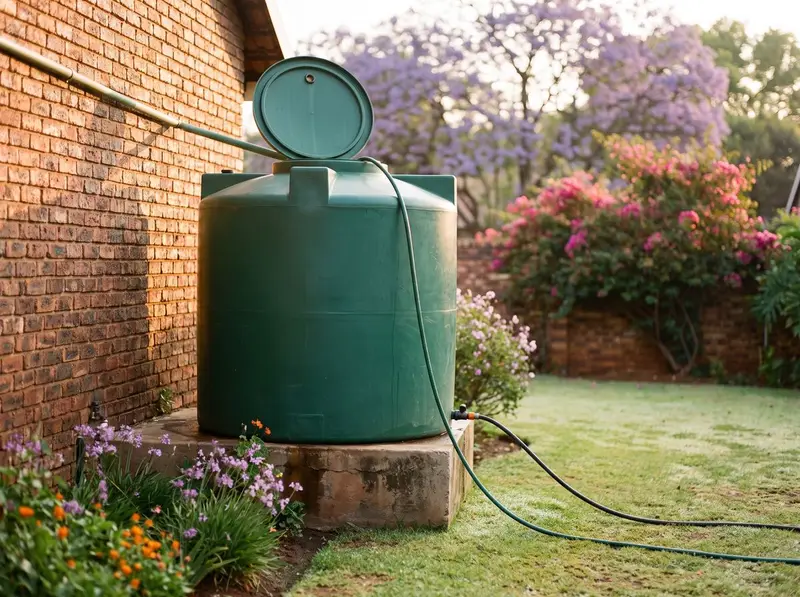
A typical call from Northcliff goes like this. A 5,000-litre tank was fitted a few winters ago to catch rain off the roof and feed the garden taps. It has never been opened since. One hot afternoon the hose starts smelling like a pond, and the water in the bucket has a green tinge that was not there in spring.

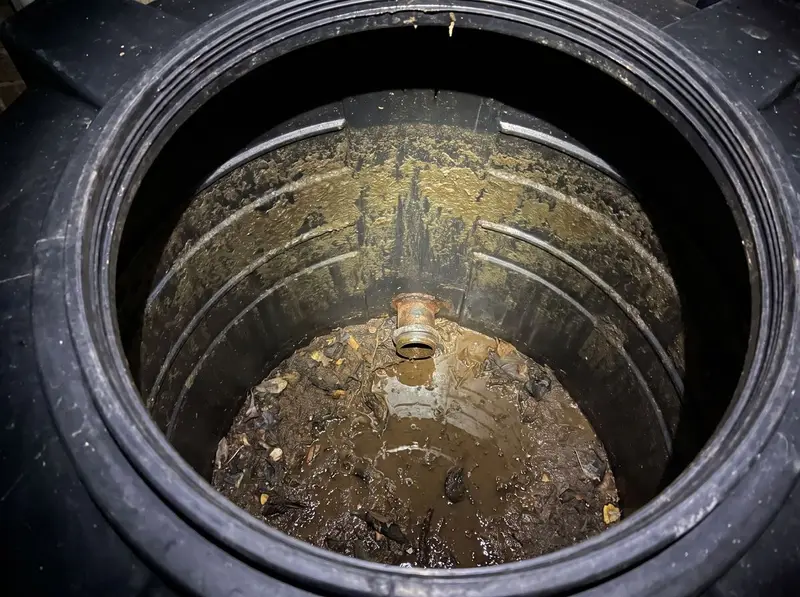
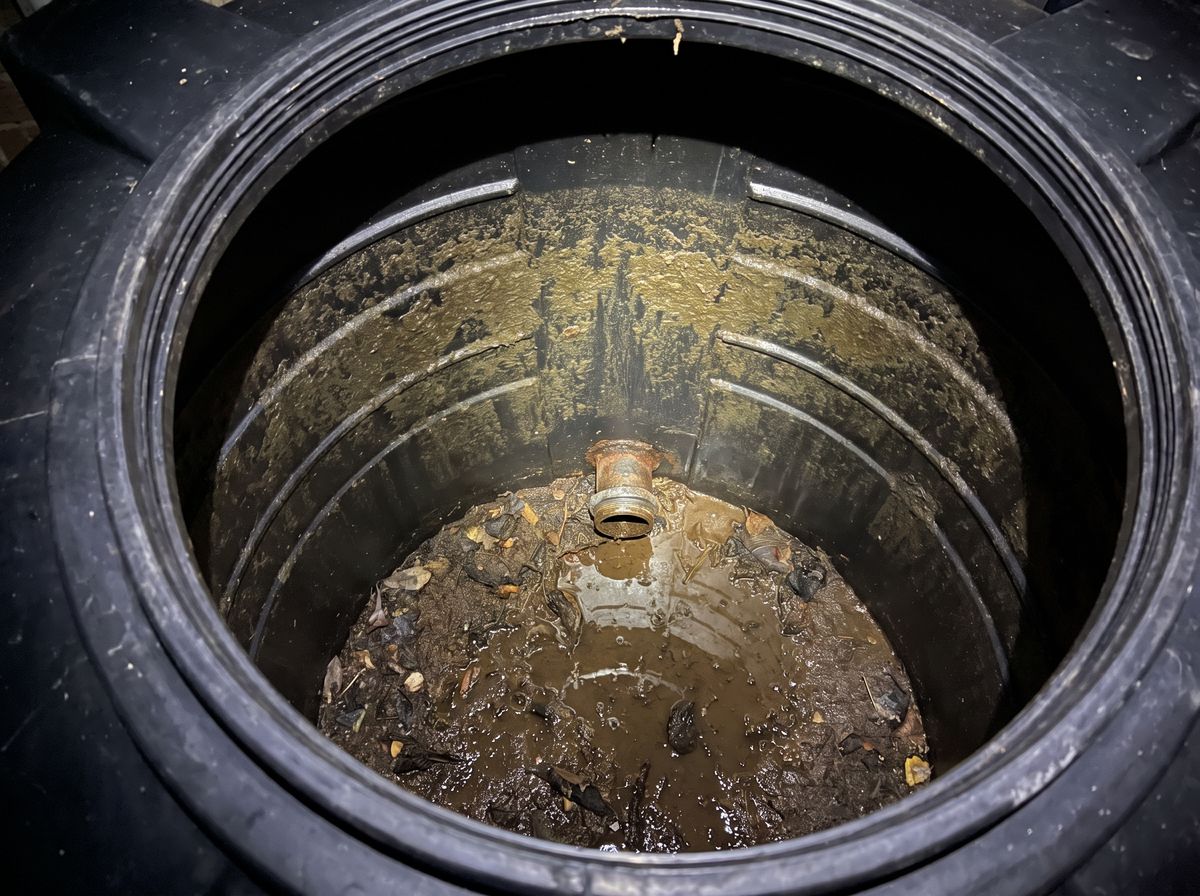
A torch through the lid tells the story. A few centimetres of silt on the floor, a layer of leaves that got past the gutter screen, and a brown-green film on the walls where the sun has been reaching in through a lid that no longer clips shut.

We pump the water down onto the beds rather than into the drain, shovel and vacuum the sludge out through the lid, scrub and pressure-rinse the walls, sanitise with an anti-bacterial steriliser at the label dose, rinse, replace the split mosquito screen on the overflow, and let it fill.

The lesson: tanks do not announce that they need cleaning. JoJo's own guidance is to check the sludge level every two years. Most tanks in Randburg have never been checked at all.
Tank Cleaning Services in Randburg

Every tank gets the same sequence: drain, remove the sludge, scrub and rinse, sanitise, check the fittings, refill. What changes is how much is sitting on the floor, and what let it in.

Standard Clean and Sanitise

For tanks cleaned within the last two years or so, and newer tanks with light sediment. We disconnect the pump and inlet, drain to the lowest outlet, remove loose sediment, scrub and pressure-rinse the walls and floor, sanitise with an anti-bacterial steriliser dosed to the tank volume, rinse, reconnect and refill.

  • Pump and inlet disconnected and reconnected
  • Drain and sediment removal
  • Walls and floor scrubbed and rinsed
  • Steriliser dosed to tank volume
  • About two hours for a 5,000-litre tank

Deep Clean: Sludge, Algae and Biofilm

For tanks that have never been opened, tanks with a smell, green walls, or more than a couple of centimetres of silt. The sludge is shovelled and vacuumed out before any water touches the walls, the sanitiser gets a longer contact time, and we find what let the muck in.

  • Sludge shovelled and vacuumed out through the lid
  • Algae and biofilm removed from walls
  • Extended steriliser contact time
  • Entry point identified and fixed
  • About 30 minutes on top of a standard clean

Annual Tank Care Visit

One visit a year that covers the clean plus the plumbing around the tank: float valve, non-return valve, pump cut-in and cut-out, inlet filter, overflow screen, and a water sample for a lab test if you drink from the tank.

  • Clean and sanitise included
  • Float valve and non-return valve checked
  • Pump and pressure switch tested
  • Inlet filter cleaned or replaced
  • Optional SANS 241 water sample

What a Tank Clean Looks Like

Three moments from a typical Randburg tank clean: what the lid hides, the rinse, and the water afterwards.

Sludge, leaves and biofilm inside a neglected water tank in Randburg before cleaning

What the Lid Hides

Randburg - Silt, leaves and a biofilm on the walls of a tank that had never been opened

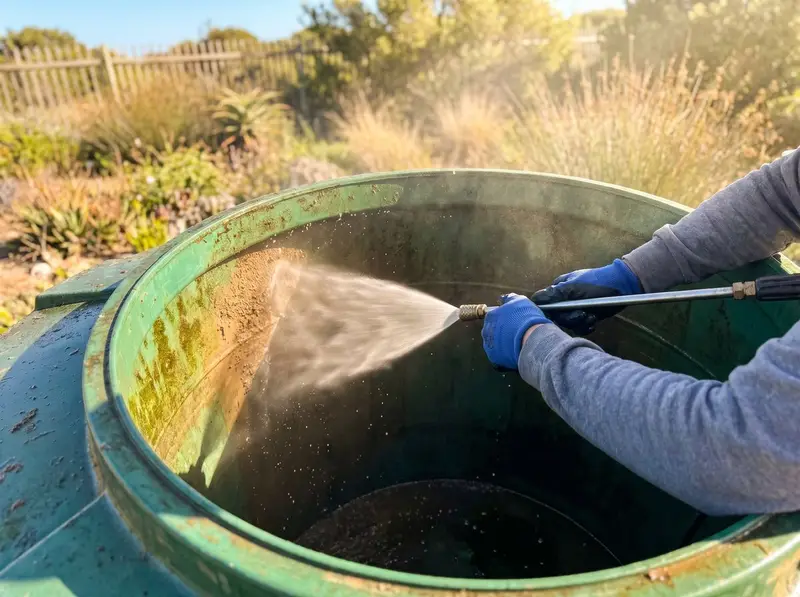
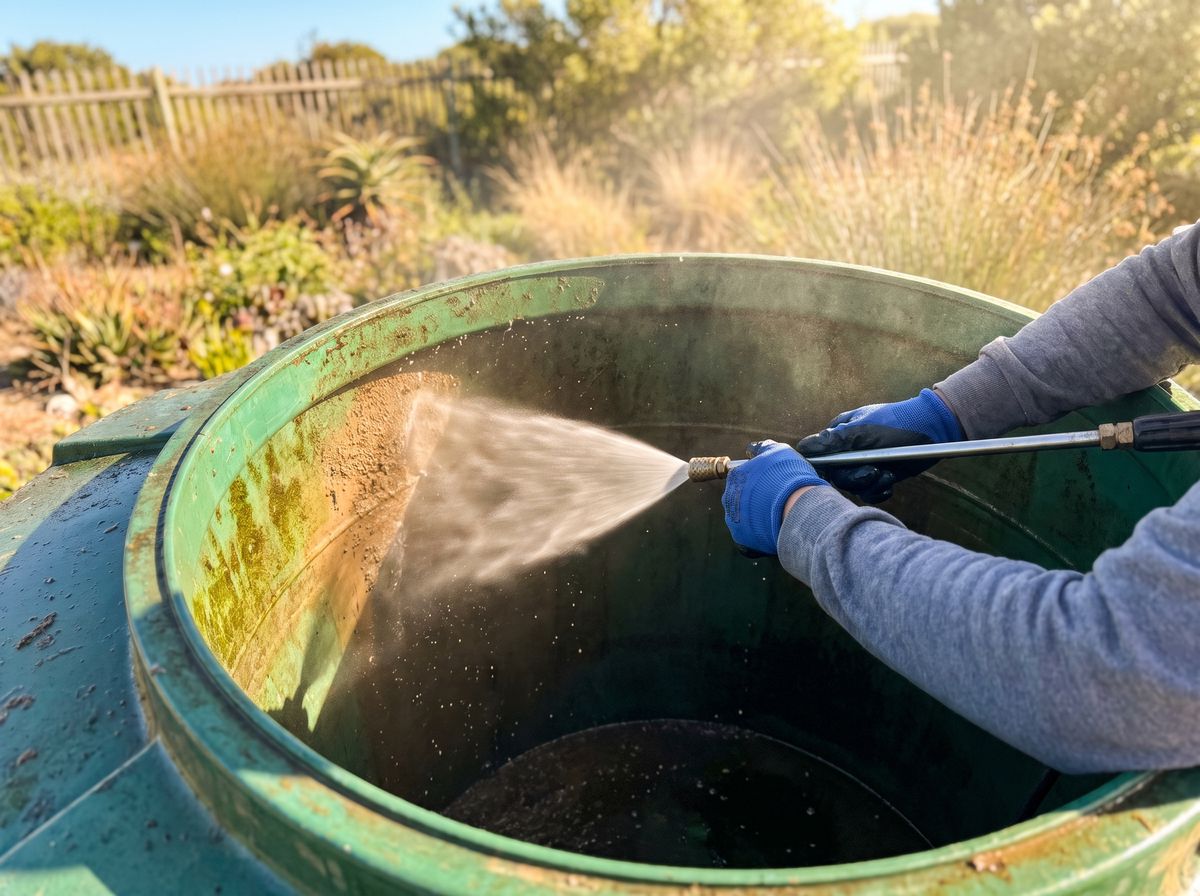
Pressure-rinsing the inside of a JoJo tank during cleaning in Fairland

Scrub and Pressure Rinse

Fairland - Walls and floor rinsed before the sanitiser goes in

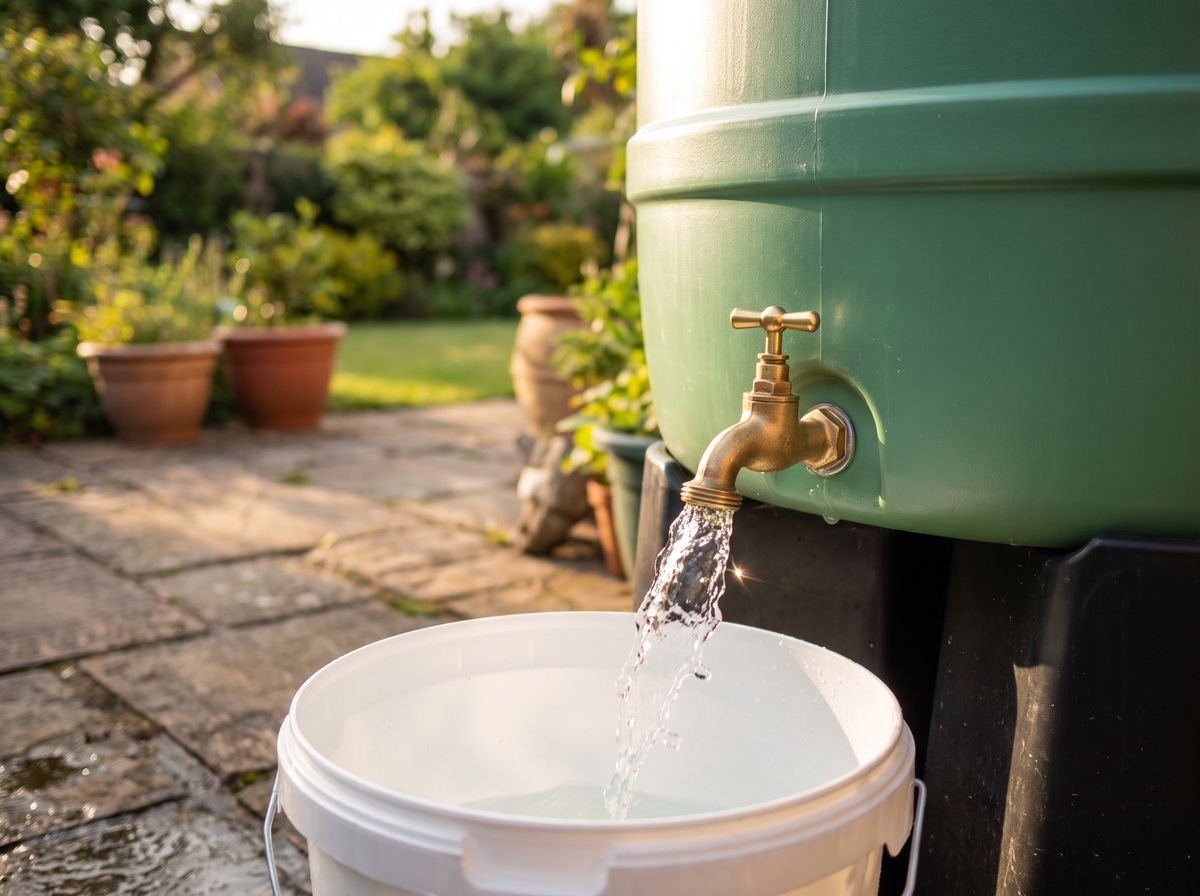
Clear water running from a water tank outlet tap after cleaning and sanitising in Northcliff

After the Refill

Northcliff - Clear water from the outlet after the clean and sanitise

How We Clean a Water Tank

Four steps, in this order, every time. The order matters: steriliser poured onto sludge does nothing except waste steriliser.

1

Drain and Inspect

We disconnect the pump and the inlet (minutes if they are on unions), drain the tank to the lowest outlet, and put a torch through the lid. Where the layout allows, the water goes onto the garden rather than down a drain. Then we measure what is on the floor and check the walls for algae.

2

Remove the Sludge

Silt, leaves, grit and anything that has died in there comes out by hand and by wet vacuum through the lid opening. We do not climb into domestic tanks, and we do not stir the sludge into the water and call it clean.

3

Scrub, Rinse and Sanitise

The walls and floor are scrubbed and pressure-rinsed, the rinse water is pumped out, and the tank is sanitised with an anti-bacterial steriliser dosed to its volume. It sits for the contact time, then gets a final rinse so the water does not taste of a public pool.

4

Check the Fittings and Refill

Lid clips, overflow mosquito screen, inlet strainer, float valve, non-return valve and the pump cut-in. Anything cracked or missing is flagged or replaced on the spot. Pump and inlet go back on, the tank refills, and we confirm the pump or the municipal switchover behaves.

Why Have a Plumber Clean the Tank

A tank is a plumbing fitting that happens to be large. The things that go wrong with it are plumbing things.

We Look at the Whole System

A cleaning crew cleans the tank. We also look at why it needed cleaning. A split overflow screen, a missing inlet strainer, a lid that no longer clips, a gutter feeding leaves straight in. Fix the cause and the next clean is a smaller job.

  • Overflow and inlet screens checked
  • Lid seal and clips inspected
  • Gutter and first-flush diverter advice
  • Pump and valve checks on the same visit

Steriliser Dosed to the Tank, Not Guessed

Household bleach poured in by the cup is how most tanks get sanitised. Too little does nothing. Too much leaves the water tasting of a public pool for a week. We dose an anti-bacterial steriliser to the label rate for the tank volume, give it the contact time, and rinse.

  • Dosed to tank volume, not guessed
  • Proper contact time
  • Final rinse before refill
  • Suitable for potable-water tanks

Water Is Not Wasted

A 5,000-litre tank is a month of garden water. Where the layout allows, we pump the old water onto beds and lawn rather than into the stormwater drain, and we time the job for when the tank is already low.

  • Drained to the garden where possible
  • Scheduled when the tank is low
  • Refill supervised, no overflow
  • Rainwater tanks cleaned before the rains

We Know Randburg Tanks

Rainwater tanks in Northcliff catch jacaranda litter. Backup tanks in Fairland sit full and still for months between outages, which is exactly how biofilm forms. Borehole storage tanks in Linden collect fine sand and iron. Each one is cleaned differently.

  • Rainwater harvesting tanks
  • Municipal backup tanks
  • Borehole storage tanks
  • Roof, slimline and linked tanks

Tank Cleaning Across Randburg

Randburg filled up with water tanks in a hurry. Most were installed during an outage, plumbed in, and never opened again. Drive through Fairland, Northcliff or Blairgowrie and almost every second garden has one. Very few have ever been cleaned.

What needs cleaning depends on what feeds the tank. Municipal backup tanks sit full and still between outages. The chlorine in the water fades within days in a warm tank, and a biofilm starts forming on the walls; the water looks clear and smells faintly stale. Rainwater tanks collect whatever the roof and gutters send down: leaves, dust, bird droppings, the occasional gecko, and mosquito larvae if the overflow screen has gone. JoJo's advice is to service these before the first rains, in August or September, and we agree. Borehole storage tanks collect fine sand, silt, iron and manganese staining and a slime that coats the float valve. These get cleaned on the same visit as the pump and filter service. We clean the storage tank; we do not clean or rehabilitate the borehole itself, which is a drilling contractor's job.

If anyone in the house drinks from the tank, cleaning is only half of it. Read about water tank testing and the UV sterilisers and filters that go on the outlet. If you are still deciding on a tank, the JoJo tank installation page explains what a proper installation includes, and the tank cleaning cost guide breaks down what a clean costs by tank size.

Common Questions About Tank Cleaning

How often should a JoJo tank be cleaned?

JoJo's own maintenance guidance is to check the sludge level and internal cleanliness every two years, or sooner depending on what feeds the tank. In practice: rainwater tanks under trees every 12 months, before the rains; municipal backup tanks every 18 to 24 months; borehole storage tanks yearly, with the pump service. Any tank with a smell, a green tinge, or grit in the tap water gets cleaned now rather than on schedule.

How much does JoJo tank cleaning cost in Randburg?

We price it on time: R1,560 an hour plus R300 for the anti-bacterial steriliser and consumables. A 5,000-litre tank takes two hours, so R3,420. Tanks under 5,000 litres take about an hour and a half (about R2,640), a 10,000-litre tank about three and a half hours (R5,760). Each additional tank on the same visit is R2,000, and heavy sludge adds about 30 minutes. Fittings to disconnect a hard-plumbed pump or inlet are extra if there are no unions. The full breakdown is on our tank cleaning cost guide.

Can I clean a water tank myself?

A small tank can be tipped on its side and hosed out. A 5,000-litre tank cannot be tipped, the sludge has to come out through the lid, and the steriliser has to be dosed to the volume. The two mistakes we see most: pouring steriliser onto sludge, which does nothing, and climbing into the tank, which you should never do. It is a confined space with a slippery floor and chlorine vapour. If you do it yourself, do it before the rains and clip the lid shut afterwards.

Do I lose all the water in the tank?

Most of it, yes. We schedule the job for when the tank is low and, where the layout allows, drain it onto the garden rather than down a drain. On backup systems the house runs on municipal supply during the clean, so you are not without water.

How long does tank cleaning take?

About an hour and a half for a tank under 5,000 litres, two hours for a 5,000-litre tank, and about three and a half hours for a 10,000-litre tank. Heavy sludge adds about 30 minutes. Add the refill time, which depends on your supply. Several tanks on one site are done in sequence on the same day.

Is the water safe to drink after the tank is cleaned?

Cleaning and sanitising deals with what was in the tank. It does not treat what comes into it afterwards. Untreated tank water, rainwater especially, is not drinking water without filtration and sterilisation at the outlet. If you drink from the tank, we can test the water after the clean and fit a UV steriliser or filter on the outlet.

Do you clean borehole tanks?

We clean borehole storage tanks, the tank the pump fills before the water goes to the house. Fine sand, silt, iron staining and slime build up faster in these than in municipal tanks. We do not clean or rehabilitate the borehole itself, the drilled hole and casing; that is a drilling contractor's job. We will service the pump, pressure switch and filters on the same visit. See borehole maintenance.

Why does my JoJo tank water smell?

Usually decaying organic matter: leaves or insects past the inlet screen, a dead animal past the overflow, or biofilm on the walls of a tank that has stood full and still for months. A faint earthy smell is common in rainwater. A rotten-egg or pond smell means the tank needs draining and cleaning, and the entry point needs fixing, or it comes back.

Do you clean concrete, steel or underground tanks?

Above-ground polyethylene and steel tanks up to about 10,000 litres are the everyday work. Larger concrete reservoirs and underground tanks are assessed first, because some need confined-space equipment we would rather not pretend to have. We will tell you on the phone which it is.

A Tank You Do Not Have to Think About

Drained, cleaned, sanitised, fittings checked, refilled. Business hours across Randburg, Fairland, Northcliff, Linden and Parkhurst.