Most borehole drilling companies drill the hole and walk away. You are left with a capped borehole, a test certificate, and a lot of questions about what happens next. That is where we come in. At Andy Plumbers, we handle everything from pump installation onwards: water testing, filtration design, tank and pump setup, and the final connection to your household plumbing. Below is the full journey, showing what happens before we arrive and exactly what we do once we take over.
Ground Survey
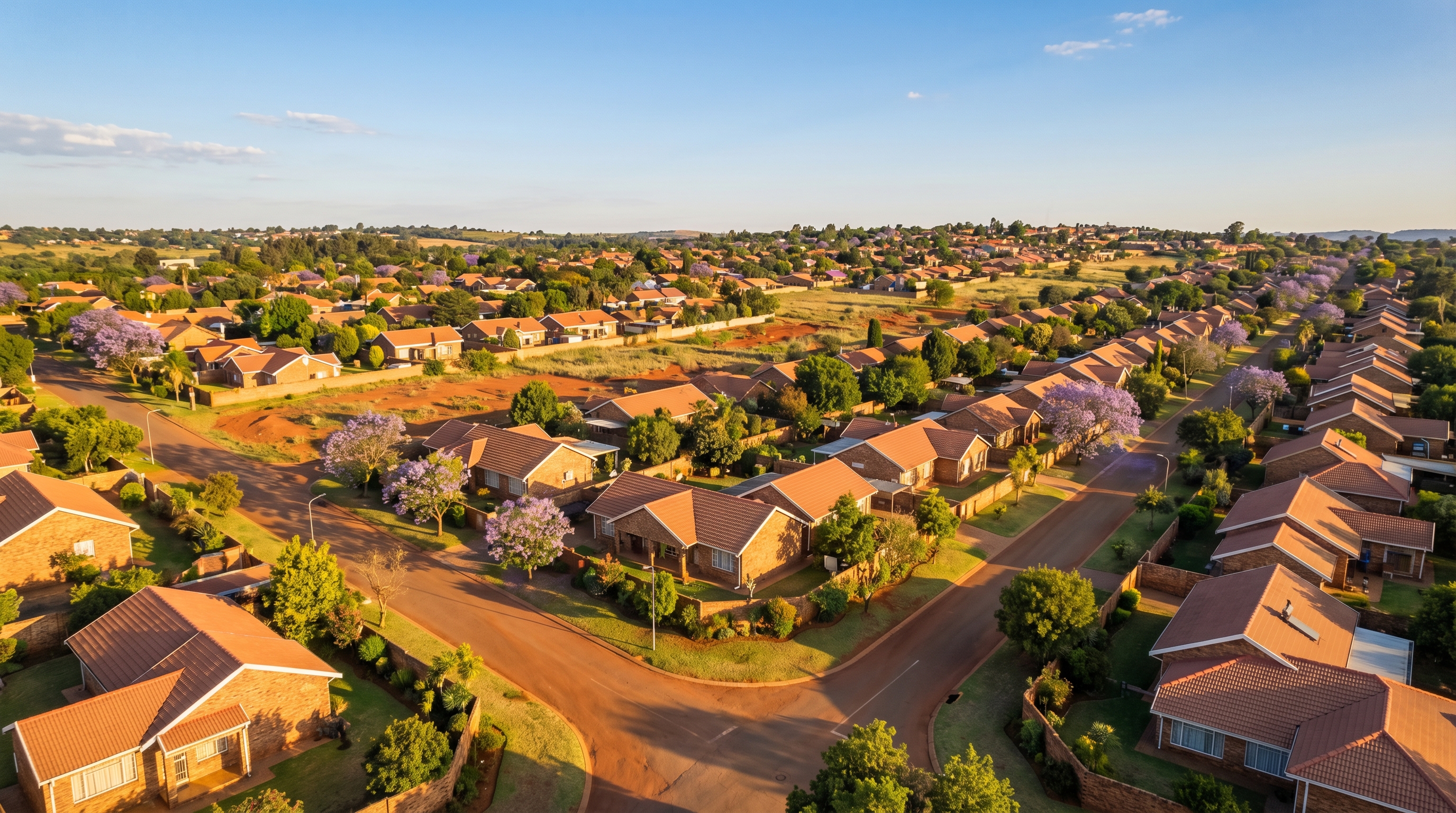
Before anyone touches a drill, a hydrogeologist visits your Randburg property with electromagnetic survey equipment. They map what is happening beneath your garden, locating water-bearing fractures in the dolomite rock that underlies much of Fairland, Northcliff and Linden.
- Electromagnetic and resistivity surveys to detect aquifer depth
- Identifies the strongest drilling point on your property
- Avoids sewer lines, electrical cables and building foundations
Drill the Borehole
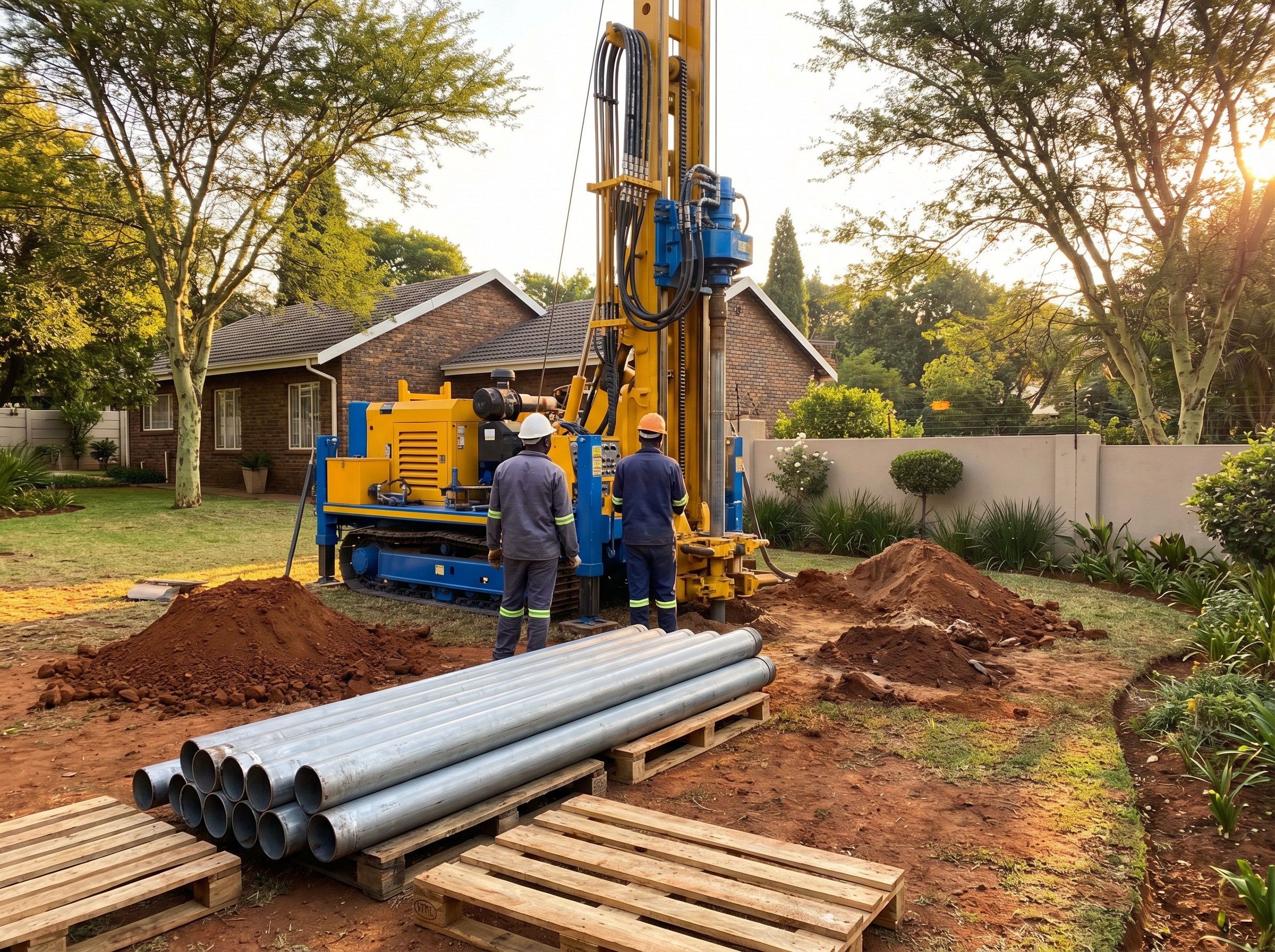
A rotary percussion rig arrives and bores through soil, clay and rock. In Randburg, drilling typically passes through 5-10 metres of topsoil and weathered rock before hitting the dolomite formations that hold the water. The rig pushes through at roughly 3-5 metres per hour depending on rock hardness.
- Typically 30 to 80 metres deep in the Randburg area
- Steel casing inserted to stabilise the upper section
- Drilling takes 1 to 2 days depending on depth and geology
Depth & Water Head Test
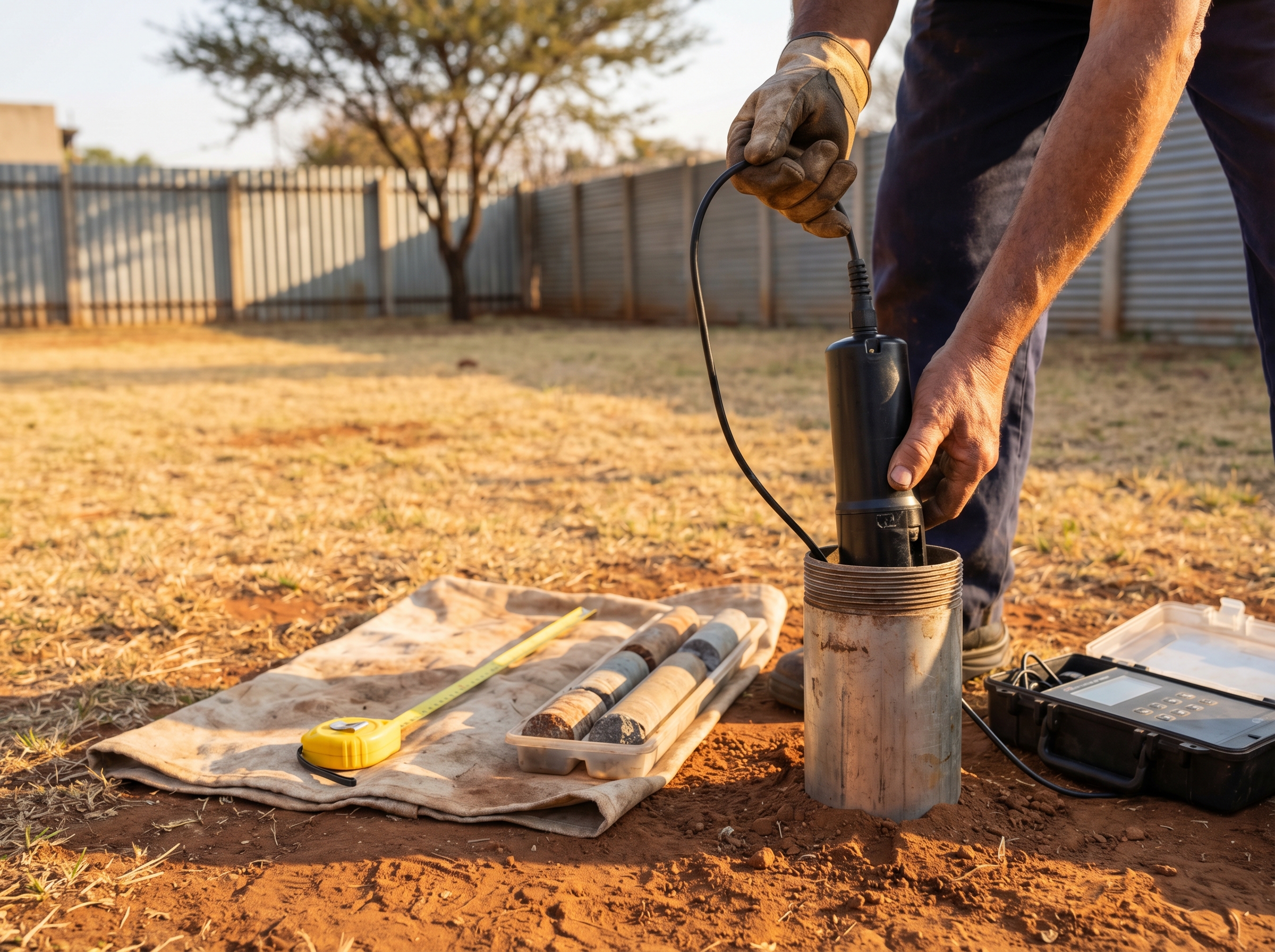
Once drilling is complete, the drilling team measures the static water level, the natural resting point of the water inside the borehole. This reveals exactly where the aquifer sits and how much natural pressure the water column provides. In most Randburg properties, the static water level sits between 8 and 25 metres below ground.
- Measure static water level with an electronic dipper
- Record the total drilled depth and geological profile
- Determine natural water pressure (the water head)
Yield Test
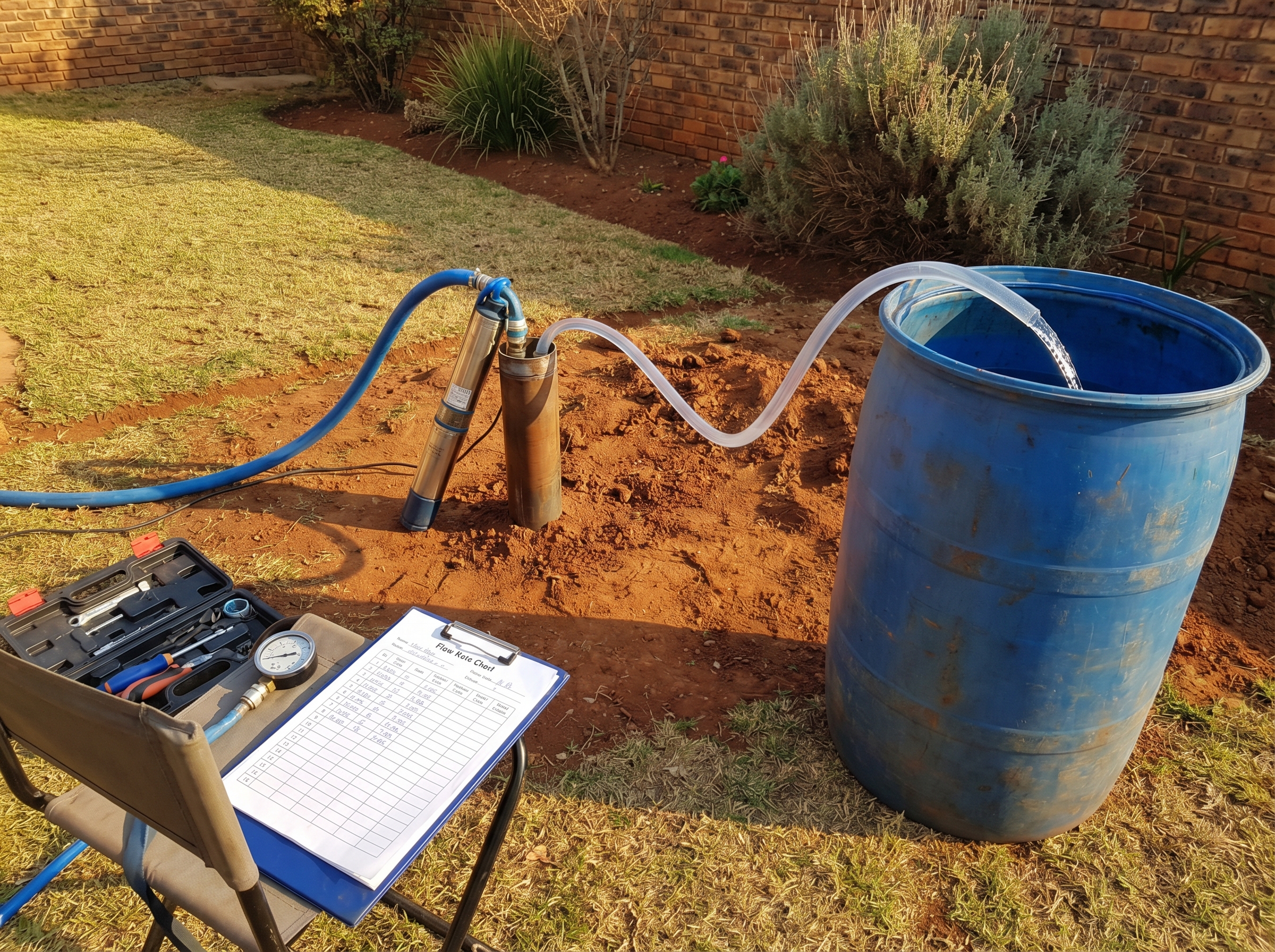
The yield test answers the most important question: how much water can you sustainably draw? The drilling company installs a test pump and extracts water at controlled rates over several hours, measuring how the water level drops and how quickly the aquifer recovers. This determines your daily available supply.
- Pump at controlled rates for 8 to 24 hours
- Measure drawdown and recovery rate over time
- Determines the sustainable litres-per-hour extraction rate
- Directly informs pump sizing and timed pumping cycles
Water Sample & Lab Analysis
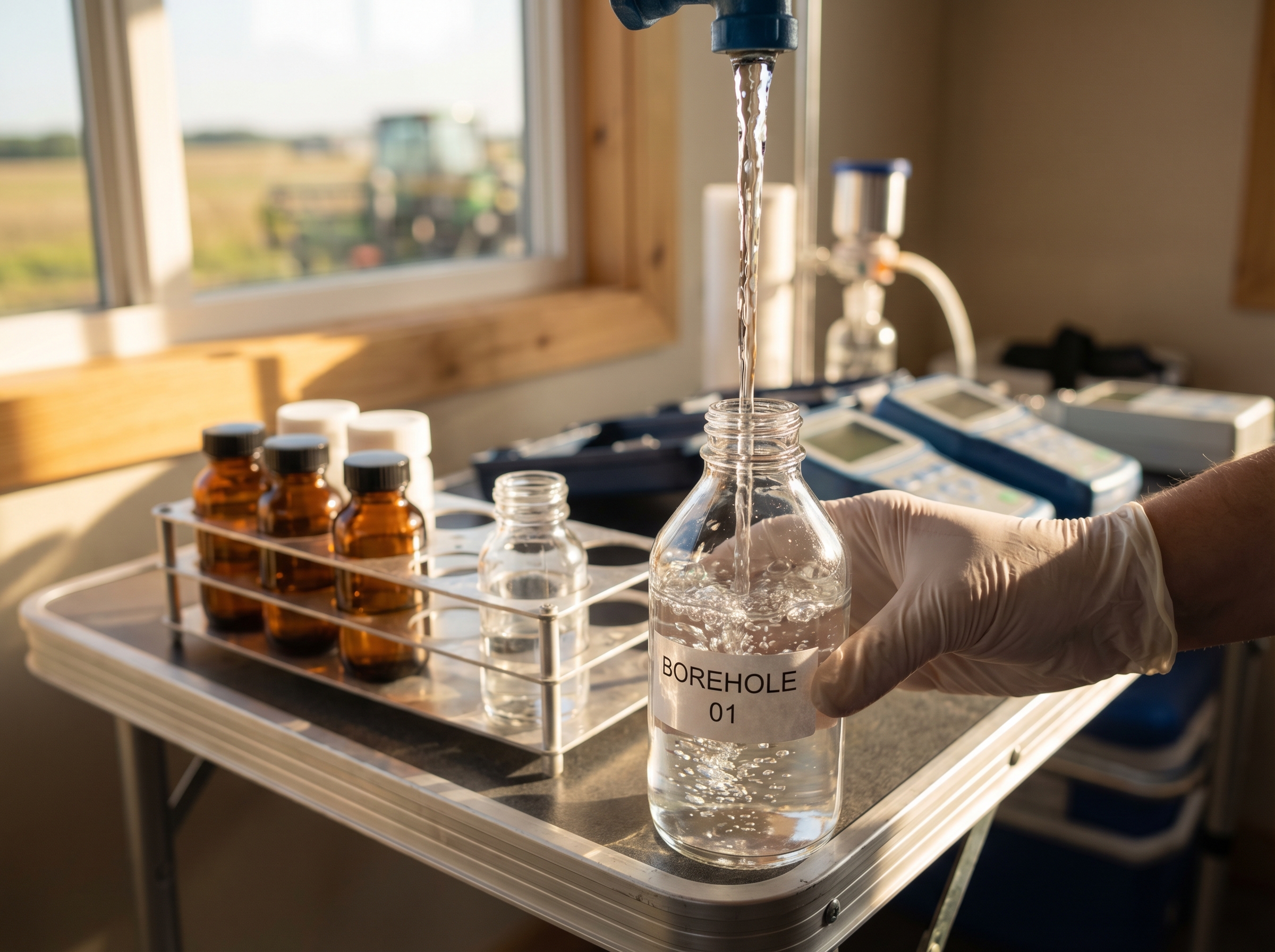
We collect water samples and send them to a SANS 241 accredited laboratory. The results paint a complete picture of your water quality: bacteria, minerals, metals, pH, turbidity, iron, manganese, and nitrates. Randburg borehole water commonly shows elevated iron and hardness, which directly shapes the filtration design.
- SANS 241 compliant laboratory analysis
- Tests for 20+ parameters including E.coli, iron, manganese, pH
- Results typically take 5 to 7 working days
- The single most important step for filtration design
Design the Filtration System
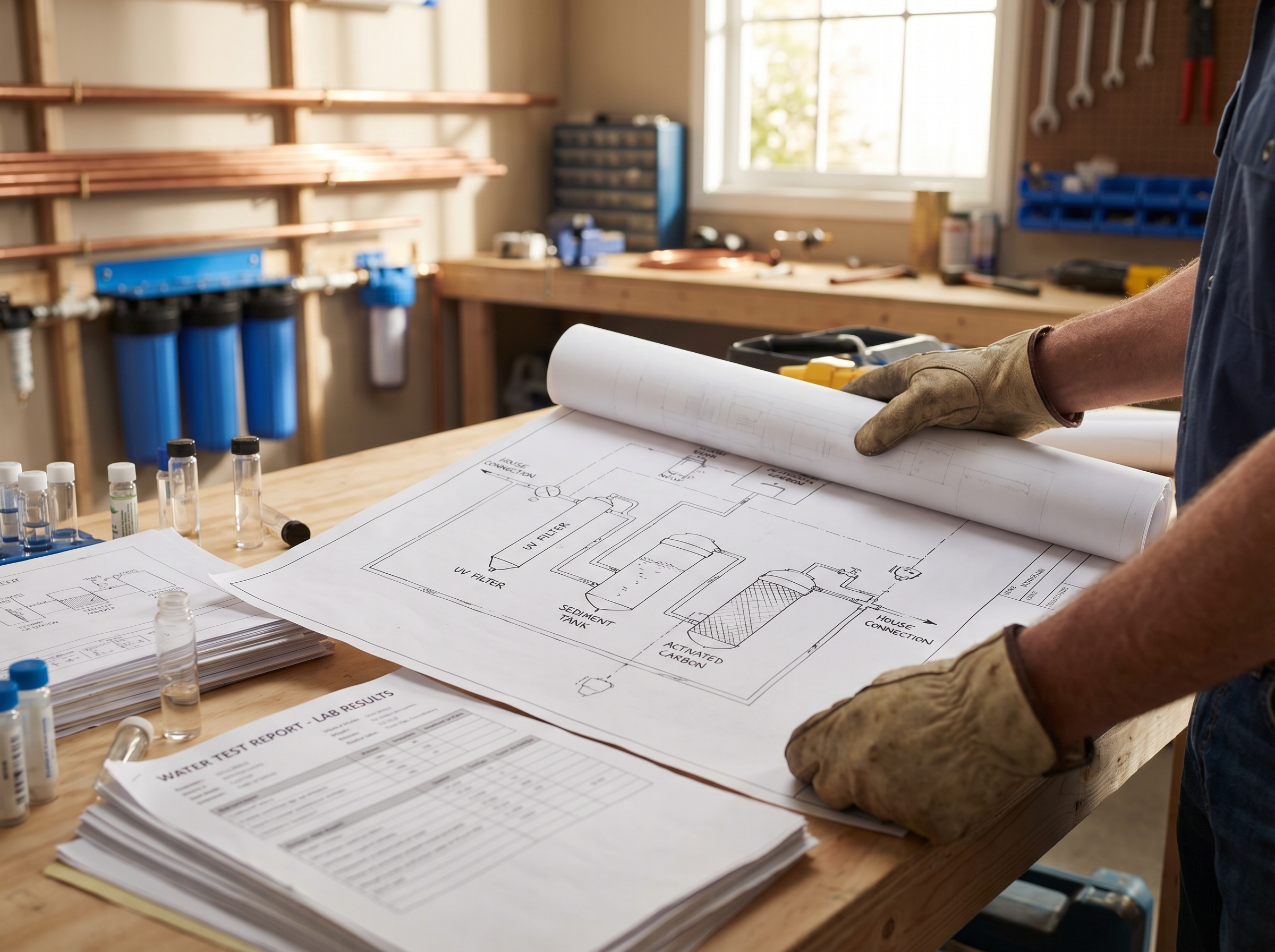
With lab results in hand, we custom-design your water treatment system. Every Randburg property gets a different configuration because every borehole has different water. A Fairland home with high iron needs an AFM oxidising vessel. A Blairgowrie property with low minerals might only need UV sterilisation and sediment removal.
- Matched to your specific water analysis results
- Considers household size and daily water usage
- Separates garden use from drinking water requirements
- Specifies every component: UV, disk, carbon, AFM, softener
Tank & Booster Pump
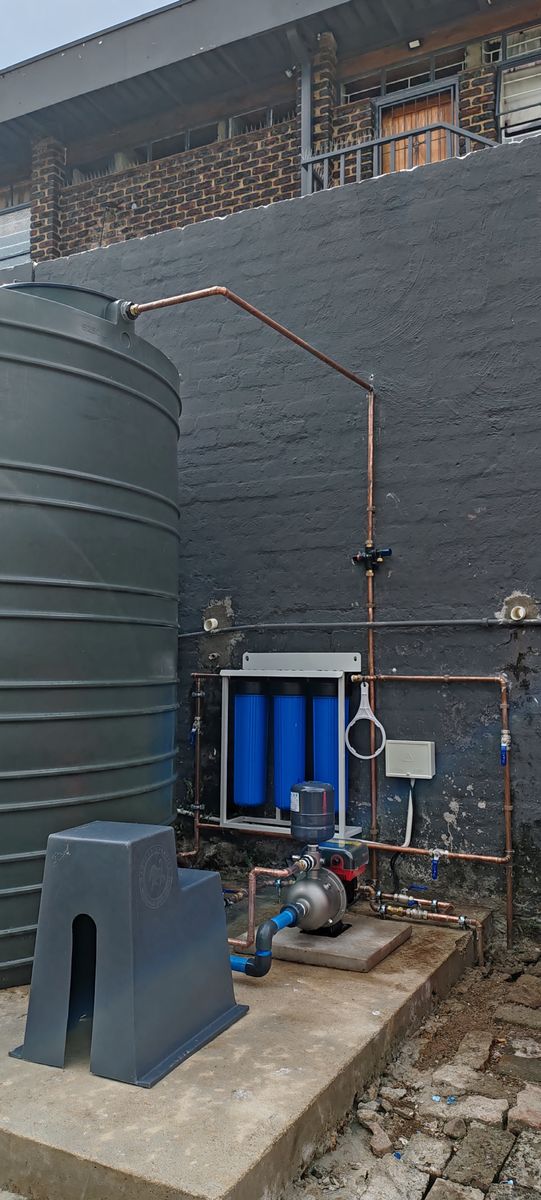
The submersible pump in your borehole pushes water up to a storage tank, typically 2,500 to 5,000 litres depending on household demand. A booster pump then delivers consistent pressure throughout your house. The system runs on timed cycles matched to the yield test results, so you never over-extract from the aquifer.
- Submersible pump sized to your borehole yield
- Storage tank provides buffer for peak demand periods
- Booster pump ensures consistent household water pressure
- Timed pumping cycles protect the aquifer from over-extraction
Filtration & Purification
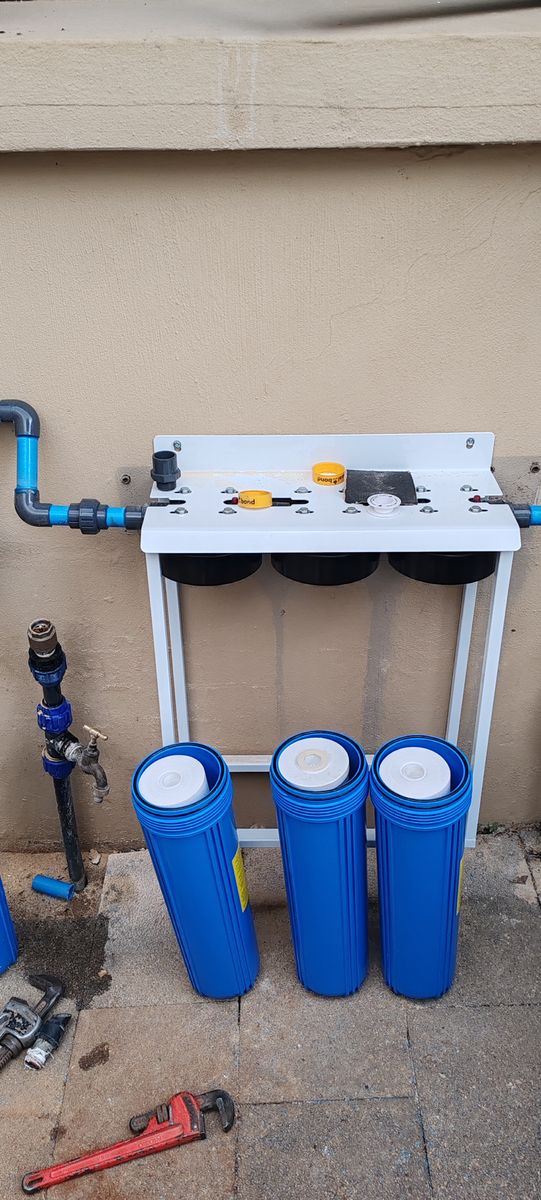
This is where the water gets clean. The standard configuration starts with a disk filter before the tank to remove sediment, followed by the AquaGuard triple-UV sterilisation system after the tank. Depending on your water analysis, we add further stages.
- Pre-tank: Disk filter catches sediment and particles
- Post-tank: AquaGuard 3-UV sterilisation is standard
- Optional: AFM vessel for iron and manganese removal
- Optional: Water softener for hard water areas
Garden Tee-Off
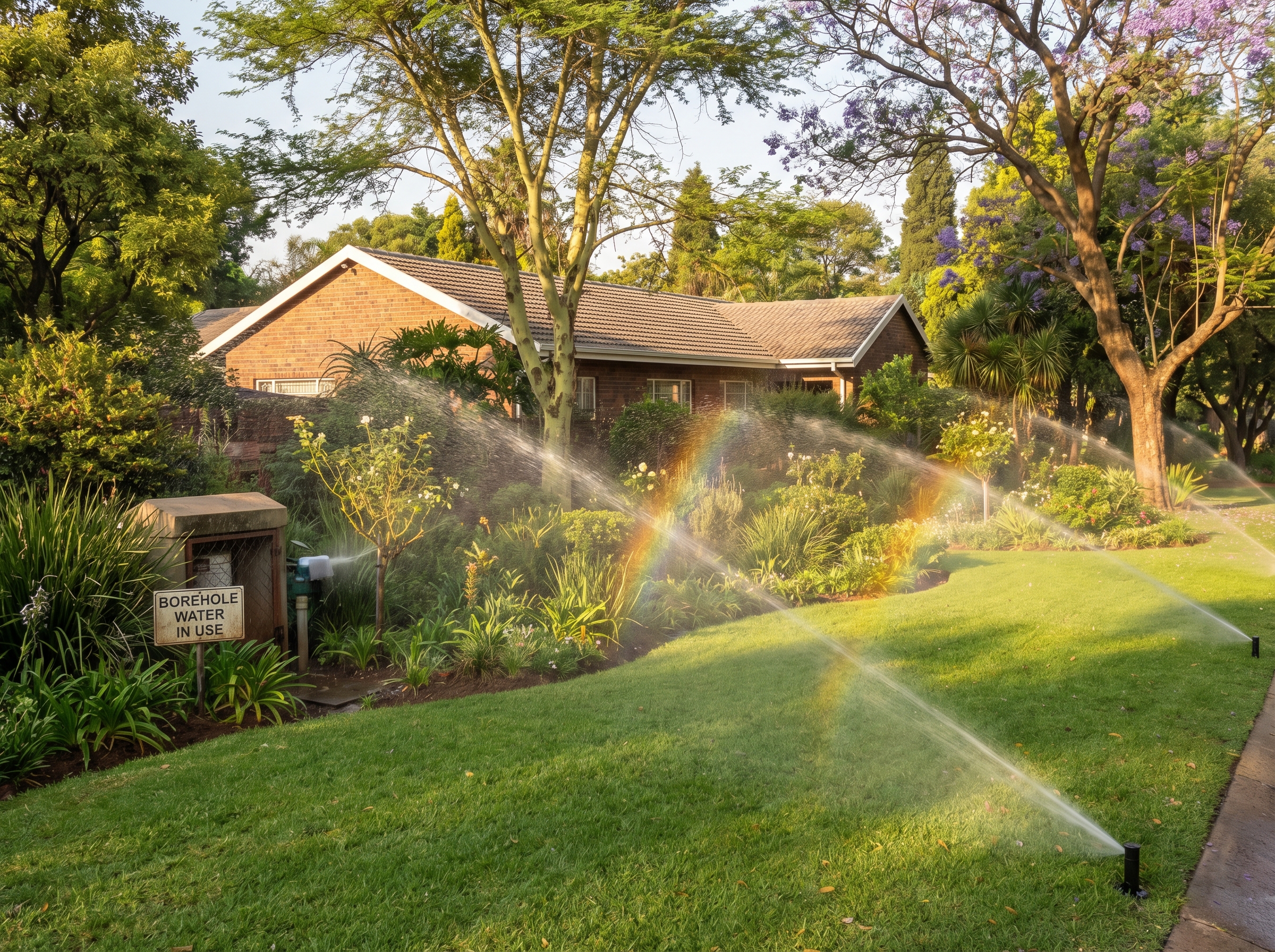
Before the water enters the fine filtration stages, we branch off a dedicated line for your garden and irrigation. Your lawn, flower beds and vegetable garden in Fairland or Parkhurst get filtered water, free of sediment and large particles, but it does not pass through the expensive UV and carbon stages. This is deliberate.
- Branches before UV and carbon filtration stages
- Garden water is filtered for sediment, not fully purified
- Saves thousands in filter replacement costs annually
- Separate valve allows independent garden control
AquaShield Drinking Water
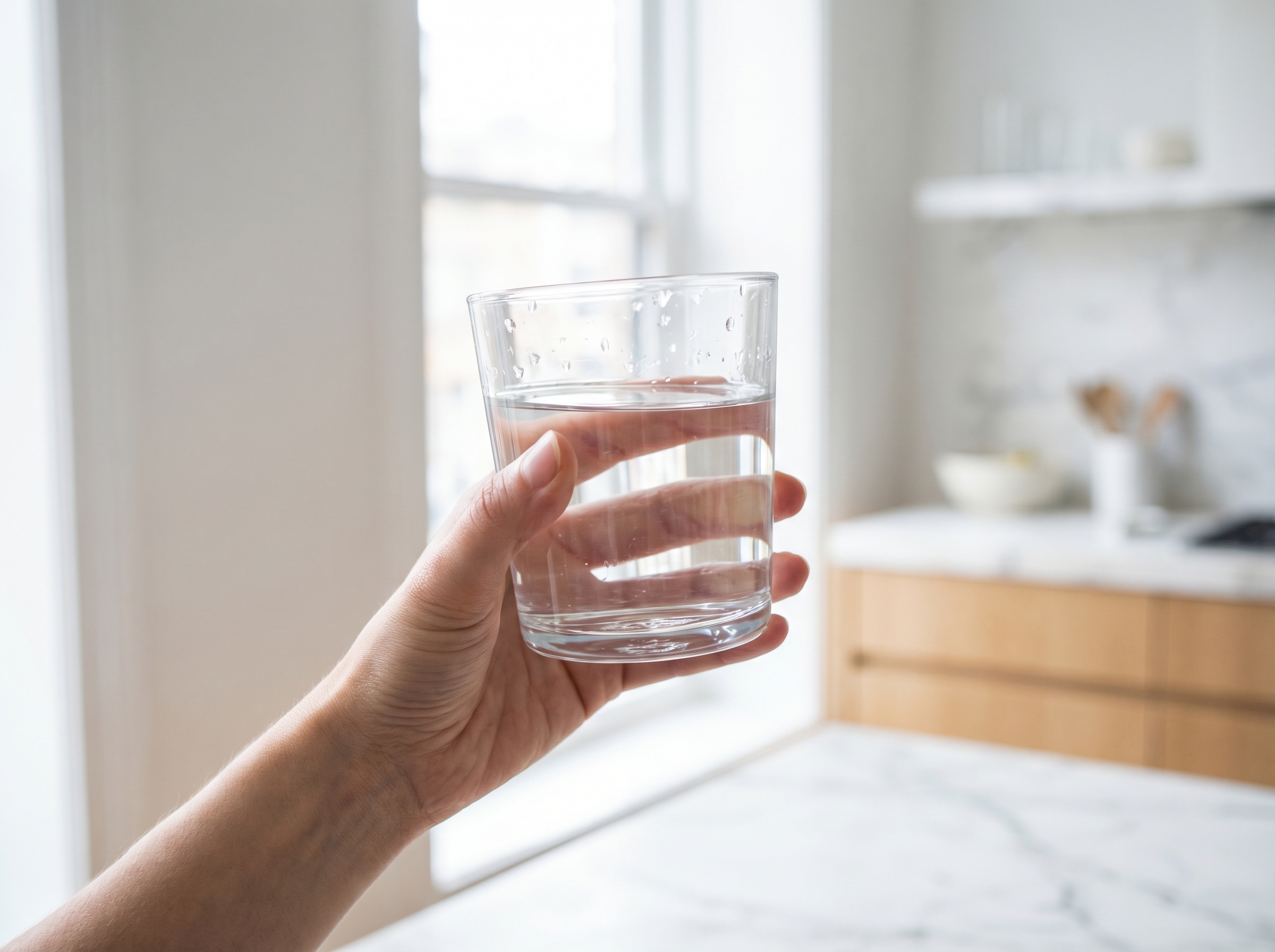
The final stage. An AquaShield unit sits under your kitchen sink and gives you the last line of purification for water you actually drink and cook with. Multi-stage filtration (sediment, activated carbon, and UV) ensures crystal-clear water that meets or exceeds municipal drinking water standards. Straight from 60 metres underground to your glass.
- Under-sink installation, clean and out of sight
- Multi-stage: sediment, activated carbon, UV sterilisation
- Dedicated drinking water tap on your kitchen counter
- The final guarantee that your borehole water is pure
Your Borehole Water System
From aquifer to tap, every component working together
The Difference Is
End-to-End Ownership
Complete Chain
One team handles every stage: survey, drill, test, filter, connect. No handoffs between separate drilling companies, pump installers and plumbers.
Lab-Driven Design
Your filtration system is designed from your actual SANS 241 water analysis, not a generic package. Every component earns its place in the chain.
Local Knowledge
Decades in Randburg means we know the geology. Dolomite in Fairland, granite in Northcliff, clay in Linden. Each needs a different approach.
Ongoing Support
Filter changes, pump servicing, annual water testing. We maintain the system we built. Your borehole investment stays performing for decades.
Borehole Installation FAQ
The complete process from ground survey to drinking water typically takes 2 to 3 weeks. Drilling itself takes 1 to 2 days, but water testing lab results take 5 to 7 working days, and the filtration system design and installation adds another 3 to 5 days.
Most residential boreholes in Randburg are drilled between 30 and 80 metres deep. The exact depth depends on the local geology and where the water-bearing aquifer sits beneath your property. Some areas in Fairland and Northcliff may require deeper drilling due to dolomite rock formations.
For reasonable domestic use you do not need a water-use licence, but in the City of Johannesburg you must apply for written consent before drilling begins, and register groundwater use with the Department of Water and Sanitation once average use exceeds about 10,000 litres a day. Commercial or large-scale use needs a full Water Use Licence. For the full breakdown see our Johannesburg water-independence guide.
No. Borehole water in Randburg commonly contains elevated levels of iron, manganese, and bacteria that make it unsuitable for drinking without treatment. A SANS 241 water test determines exactly what contaminants are present so the correct filtration system can be designed.
AquaGuard is the whole-house UV sterilisation system installed after the storage tank, typically with 3 UV chambers. AquaShield is the under-sink drinking water purification unit installed at the kitchen tap, the final stage of purification specifically for water you drink and cook with.
A complete borehole installation in Randburg typically costs between R60,000 and R120,000. This includes drilling, casing, pump installation, water testing, and basic filtration. More complex filtration systems with AFM vessels, water softeners, or whole-house purification add to the total cost.
Generally yes. We install a tee-off point before the fine filtration stages specifically for garden and irrigation use. The water passes through a basic disk filter for sediment removal but does not go through UV or carbon stages. This saves filter life and reduces running costs significantly.
A properly conducted yield test before installation determines the sustainable extraction rate. We size your pump and set timed pumping cycles to match the aquifer recovery rate, preventing over-extraction. If water levels drop unusually, the pump protection system shuts off automatically to prevent damage.
Ready to Start Your
Borehole Journey?
From ground survey to drinking water. We handle every stage. Talk to our Randburg borehole team about your property.